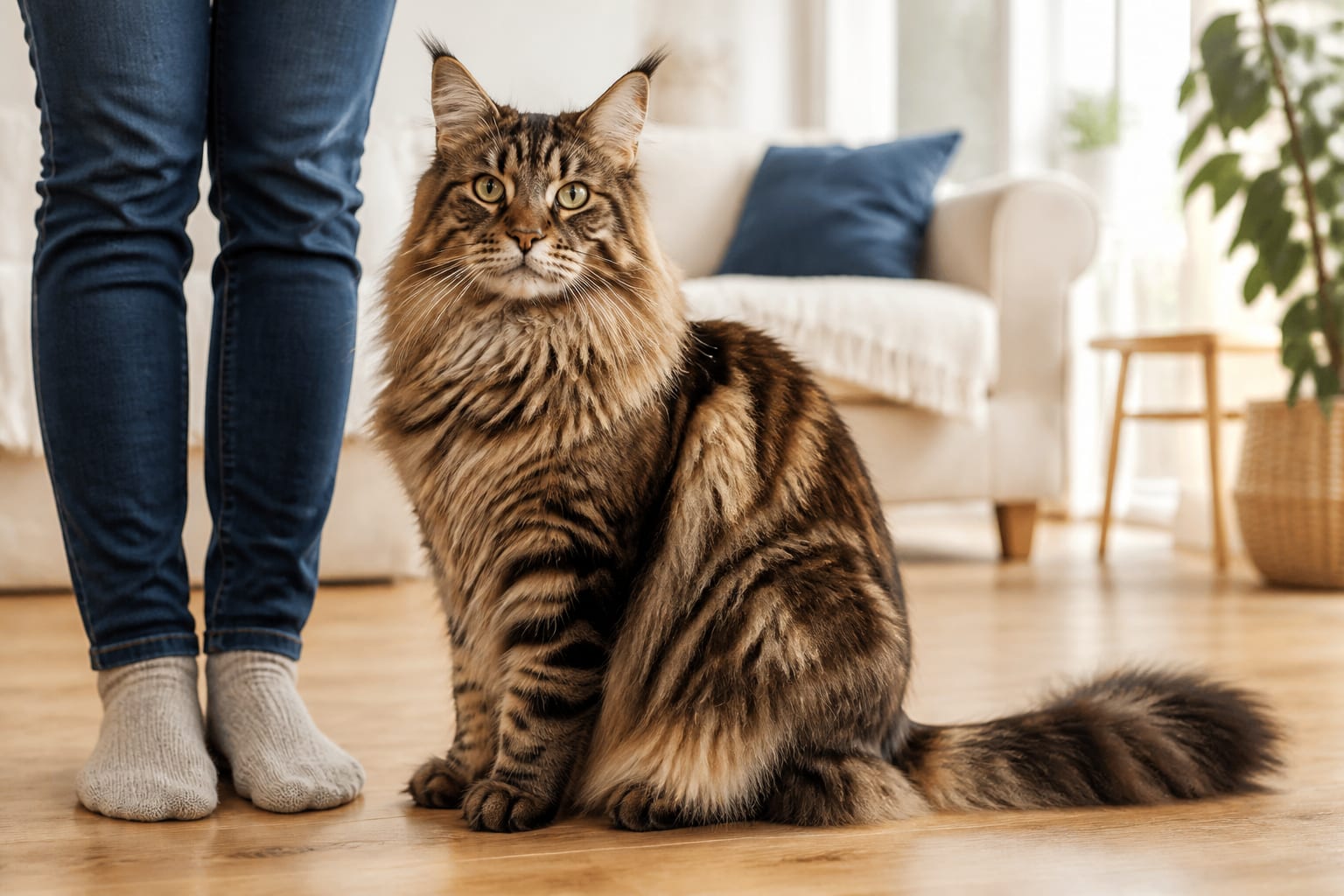
Bramble is four years old, three feet and change from nose to tail tip, and weighs twenty-four pounds. He is not overweight.
This is a hard thing for the internet to accept. Photos of him draw a reliable stream of comments about obesity, diabetes risk, and irresponsible owners. His veterinarian, Dr. Simone Achterberg, has heard all of it, and her response is that weight in cats is close to useless as a standalone number.
"Twenty-four pounds on a domestic shorthair with fine bones would be a genuine emergency," she said. "Twenty-four pounds on a large-framed Maine Coon male with a body condition score of five out of nine is a big cat. The scale doesn't know the difference. Your hands do."
Maine Coons are one of the largest domestic breeds, and mature males in the sixteen-to-twenty-five-pound range are within normal variation. They also mature unusually slowly, continuing to fill out until roughly four or five years old, which means an eighteen-month-old Maine Coon that looks lanky is not finished.
What clinicians use instead is body condition scoring, a hands-on nine-point scale. The three checks that matter, in order:
Ribs. Run your flat palm along the side of the chest with light pressure. You should feel each rib distinctly, with a thin layer over it — the texture of the back of your own hand, not your knuckles and not your palm. If you have to press to find ribs, the cat is carrying too much. If ribs are visually obvious and sharp, too little.
Waist from above. Look down at a standing cat. There should be a visible narrowing behind the ribcage, before the hips. A straight line from armpit to hip, or an outward bulge, is fat.
Profile from the side. The abdomen should tuck up slightly from the ribcage toward the hind legs. A belly that hangs level with or below the ribs is not.
One structure confuses nearly everyone: the primordial pouch, a loose flap of skin and a small amount of fat on the lower belly that many cats have regardless of condition. It swings when they walk and it looks like weight gain. It is normal, it is more pronounced in some breeds and in cats who have been spayed or neutered, and it does not disappear with weight loss.
Bramble's actual health markers, from his last full workup: normal glucose, normal thyroid, clean urinalysis, no radiographic evidence of joint disease, and a resting heart rate at the low end of normal for his size. He gets measured meals twice a day, a food puzzle for a portion of his ration, and about twenty minutes of active play a night, which Achterberg says is a bigger factor in his condition than anything about the food.
The reason she bothers pushing back on the comments at all is that the reverse error is far more common and far more harmful. Somewhere between forty and sixty percent of pet cats in surveyed populations are overweight or obese, and the majority of those owners report believing their cat's weight is normal. "The cat people are yelling at is fine," she said. "There is a very good chance the cat sitting next to them while they type is not. Go put your hands on your own cat's ribs."