Ask anyone who works in a shelter and they'll tell you black cats sit longer. The data broadly supports it: across a number of North American intake studies, black-coated cats show longer average lengths of stay than tabbies, tuxedos, or dilute-coated cats, with the gap typically ranging from a few days to a few weeks depending on the facility.
The usual explanation offered to the public is superstition. Staff at the Wrenfield Cat Sanctuary got tired of that answer and spent six months testing a different one.
"Superstition is a real thing and it's a small thing," said the sanctuary's director, Constance Rimmer. "We surveyed our own adopters. Almost nobody says 'I won't take a black cat because it's unlucky.' What they say is: I couldn't see her face in the picture. I scrolled past her. I didn't know she had green eyes."
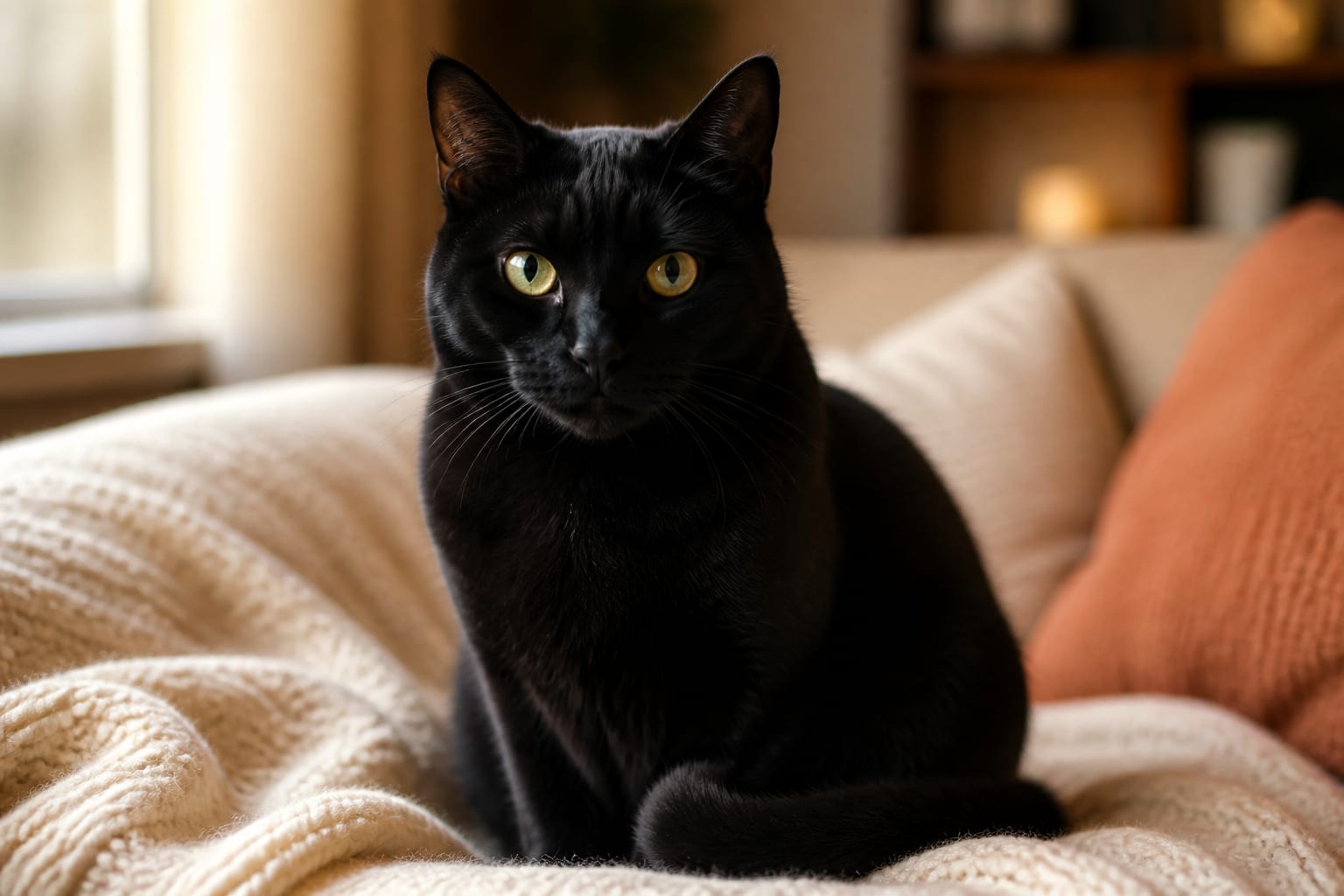
Black cats are genuinely hard to photograph, and the reason is technical rather than aesthetic. Camera meters average a scene toward middle grey, so a dark subject gets overexposed into a flat charcoal shape while the background blows out. Facial contrast — the eye and mouth definition that human viewers use to read expression and, research suggests, to form an impression of friendliness — largely disappears. In a grid of forty adoptable cats on a website, a black cat photographed under kennel fluorescents is frequently a silhouette.
Wrenfield changed four things. They shot black cats against mid-grey and warm-brown backdrops instead of white or black. They lit from the side rather than overhead, to get a rim of light along the jaw and shoulder. They shot at slight overexposure, deliberately, to bring detail into the coat. And they required at least one photo per cat with the eyes fully lit and open.
Average length of stay for black cats at the sanctuary fell from thirty-eight days to twenty-two over the following six months. Length of stay for all other coat colors changed by less than two days, which suggests the effect wasn't simply a general adoption surge.
The sanctuary also dropped a practice it now considers counterproductive: themed black-cat promotions around Halloween. "We used to lean into the spooky thing," Rimmer said. "Free adoptions, witch hats, the works. We were reinforcing the exact frame we were trying to get out of. Now we run black-cat features in February with a lot of sunlight in the photos, and it works considerably better."
There is one Halloween-adjacent belief worth retiring on the evidence: the widely repeated claim that shelters suspend black cat adoptions in October because of ritual abuse. Multiple humane organizations have looked for evidence of this over decades and haven't found a pattern to support it. Most shelters that once had October moratoria have dropped them, on the grounds that a policy which keeps adoptable cats in cages for a month needs better justification than a rumor.
Wrenfield currently has fourteen adult black cats available. All fourteen have new photographs. Nine of them, Rimmer notes, have visibly green eyes, which you could not have told from their previous listings at all.