Reviewed by a veterinarian. General guidance only. Ages given are rough — a giant breed is geriatric years before a terrier is.
The most consequential sentence in senior dog medicine is "he's just getting old." It gets applied to stiffness, to weight loss, to accidents in the house, to night pacing, to a dog who no longer greets people at the door — and in a large share of cases it's covering something that has a name and a treatment.
Chronological age is also a bad guide on its own. A Great Dane is functionally geriatric at six or seven; a small terrier might not be until twelve. The usual rule of thumb is that a dog enters the senior bracket in the last quarter of its expected lifespan, which for most medium dogs lands somewhere between eight and ten.
Six changes veterinarians consistently recommend at that point:
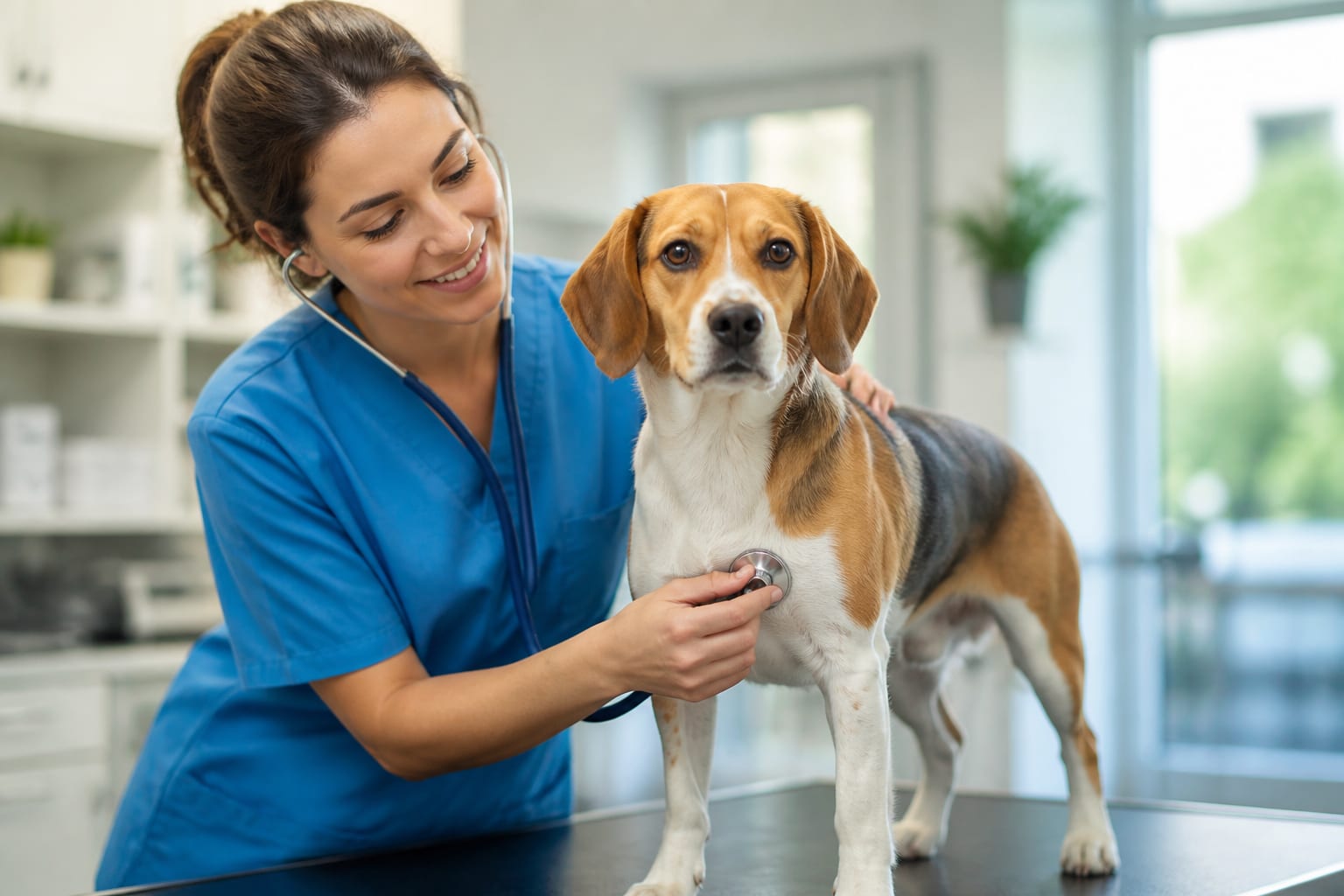
1. Go to twice-yearly exams. This is the highest-value change on the list and the one most people skip. A year in a nine-year-old dog is a significant fraction of remaining life, and conditions like kidney disease, Cushing's, and many cancers move fast enough that a twelve-month interval routinely misses the treatable window.
2. Get baseline bloodwork while he's well. A senior panel with a urinalysis on a healthy dog is not a waste of money — it's the reference point that makes next year's numbers interpretable. A creatinine value that is technically within the normal range but has doubled since last year is real information, and you only get it if last year exists.
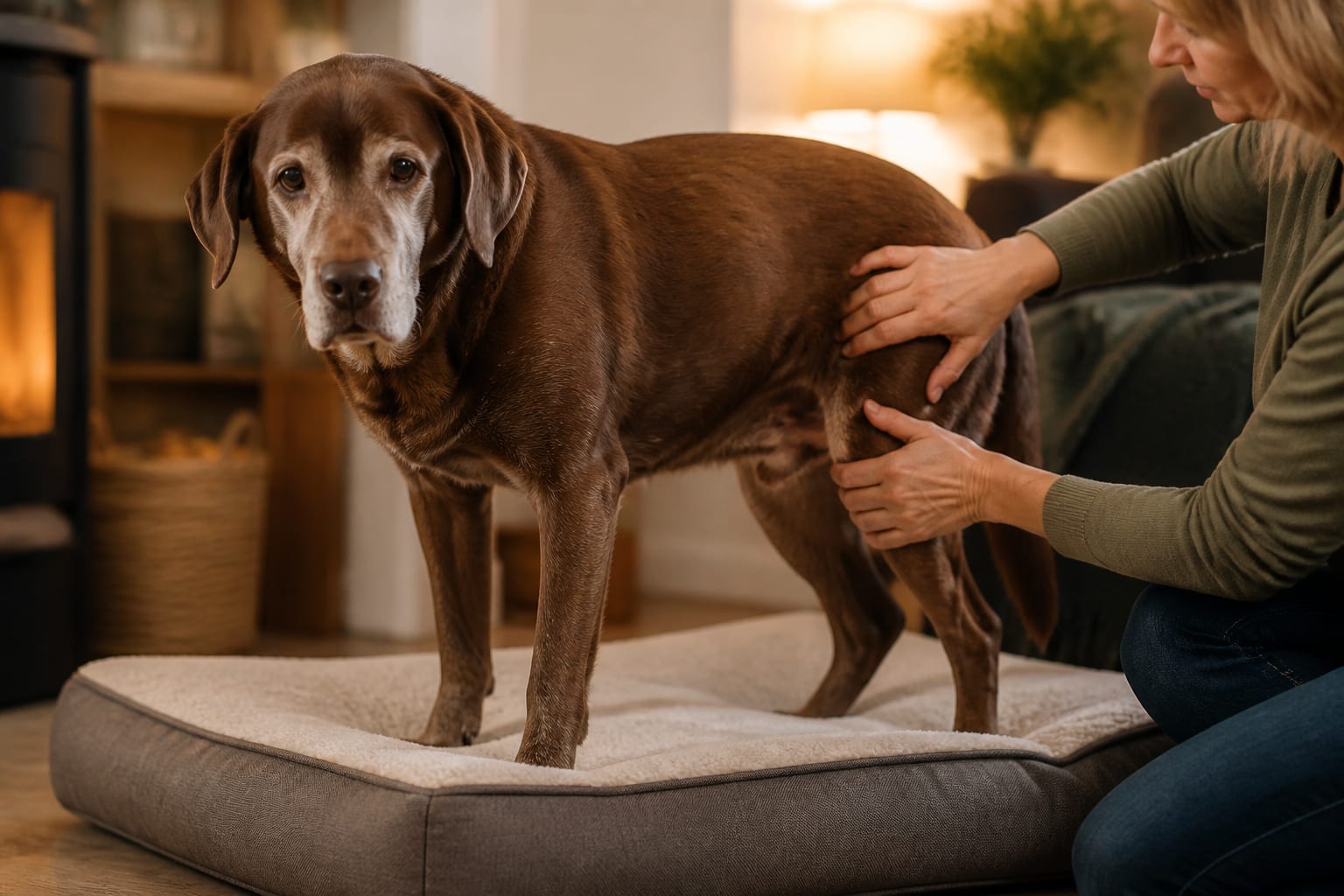
3. Take pain seriously and stop looking for limping. Osteoarthritis is present in a very large proportion of older dogs and it rarely presents as a limp. It presents as reluctance on stairs, hesitation getting into the car, sitting down slowly, sleeping more, becoming grumpy when handled, or stopping halfway through a walk he used to finish. Effective options now go well beyond daily anti-inflammatories, including monthly monoclonal antibody injections, physical rehabilitation, and weight reduction — which is, unglamorously, the single most effective arthritis intervention there is.
4. Fix the floors. Hardwood and tile are genuinely hazardous for a dog with reduced hind-end strength. Runners along the routes he uses, a non-slip mat at the base of stairs and in front of the water bowl, a ramp instead of a jump into the car, and keeping the fur between his pads trimmed will do more for his confidence than most supplements.
5. Reassess the food, and don't assume "senior" on the bag means anything. Senior diets are not a regulated category and vary enormously. What matters is the individual: an older dog losing muscle usually needs more high-quality protein, not less, and the long-standing habit of restricting protein in healthy older dogs is not supported. If there's diagnosed kidney or heart disease, that's a specific prescription diet conversation, not a shelf decision.
6. Track cognition deliberately. Canine cognitive dysfunction is common and under-diagnosed. The pattern to watch for is disrupted sleep and night pacing, staring at walls, getting stuck behind furniture, forgetting learned routines, and house soiling in a previously reliable dog. There are dietary, environmental, and pharmacological interventions that help, and they work considerably better early than late.
The one thing veterinarians ask owners to stop doing is waiting for a crisis to book an appointment. "The dog I can help most is the one whose owner came in because he seemed a bit slower on walks," said Dr. Rosalind Quintero, who runs a senior-focused practice. "The dog I can help least is the same dog eight months later, when the reason he's slower is obvious to everyone."