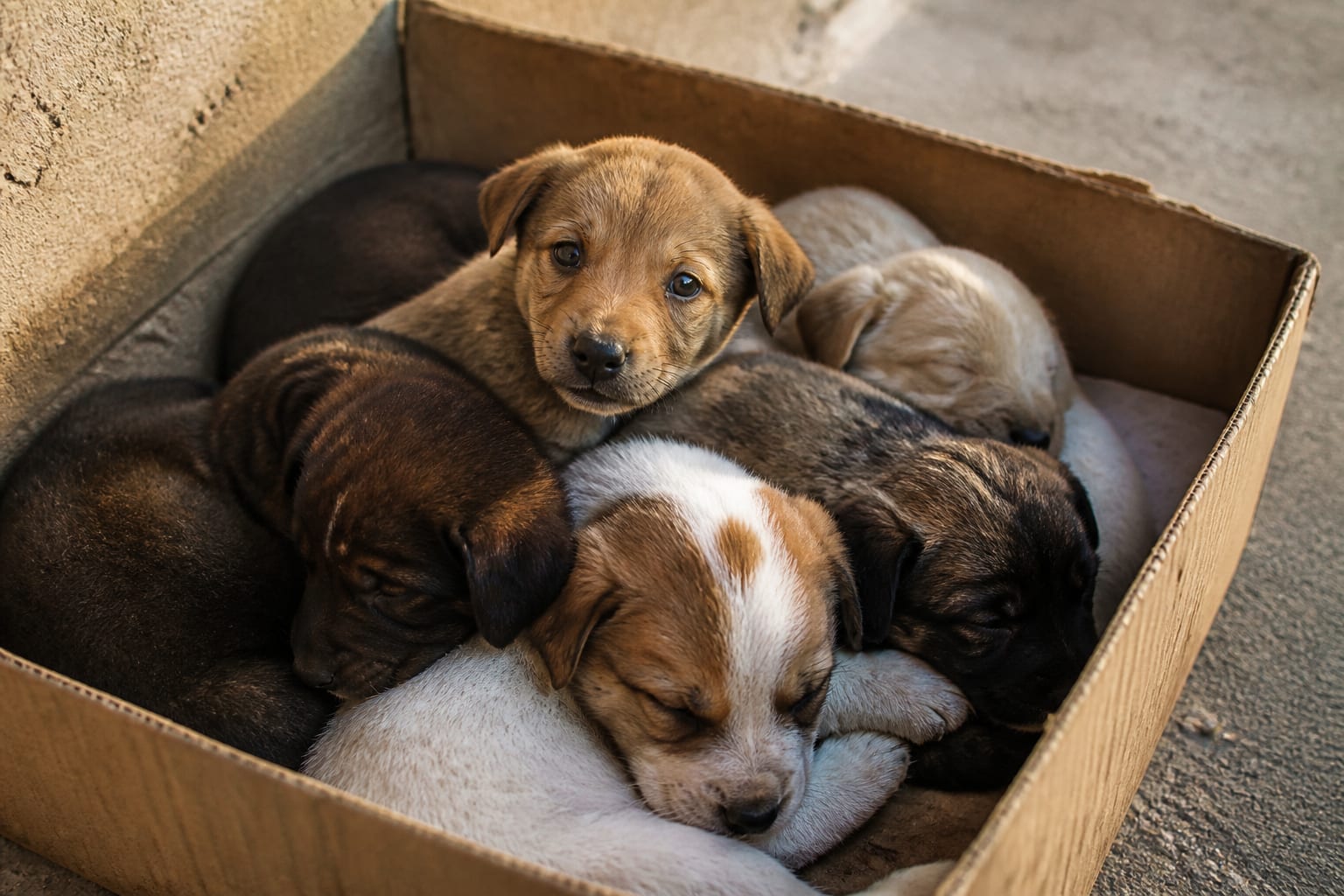
The six puppies came into Kesterly County Animal Services in April as an owner surrender: a young mixed litter, blocky heads, mostly brindle, all healthy. They were, by every measure that should matter, easy adoptions. They were eight weeks old.
They sat for six weeks with no applications at all.
"We could have told you that would happen before they walked in the door," said the shelter's adoption coordinator, Yusuf Amankwah. "We know exactly what happens to a litter that gets labeled pit bull mix in an intake field. The photos go up, and nothing happens, and after a while the photos start to look like the reason."
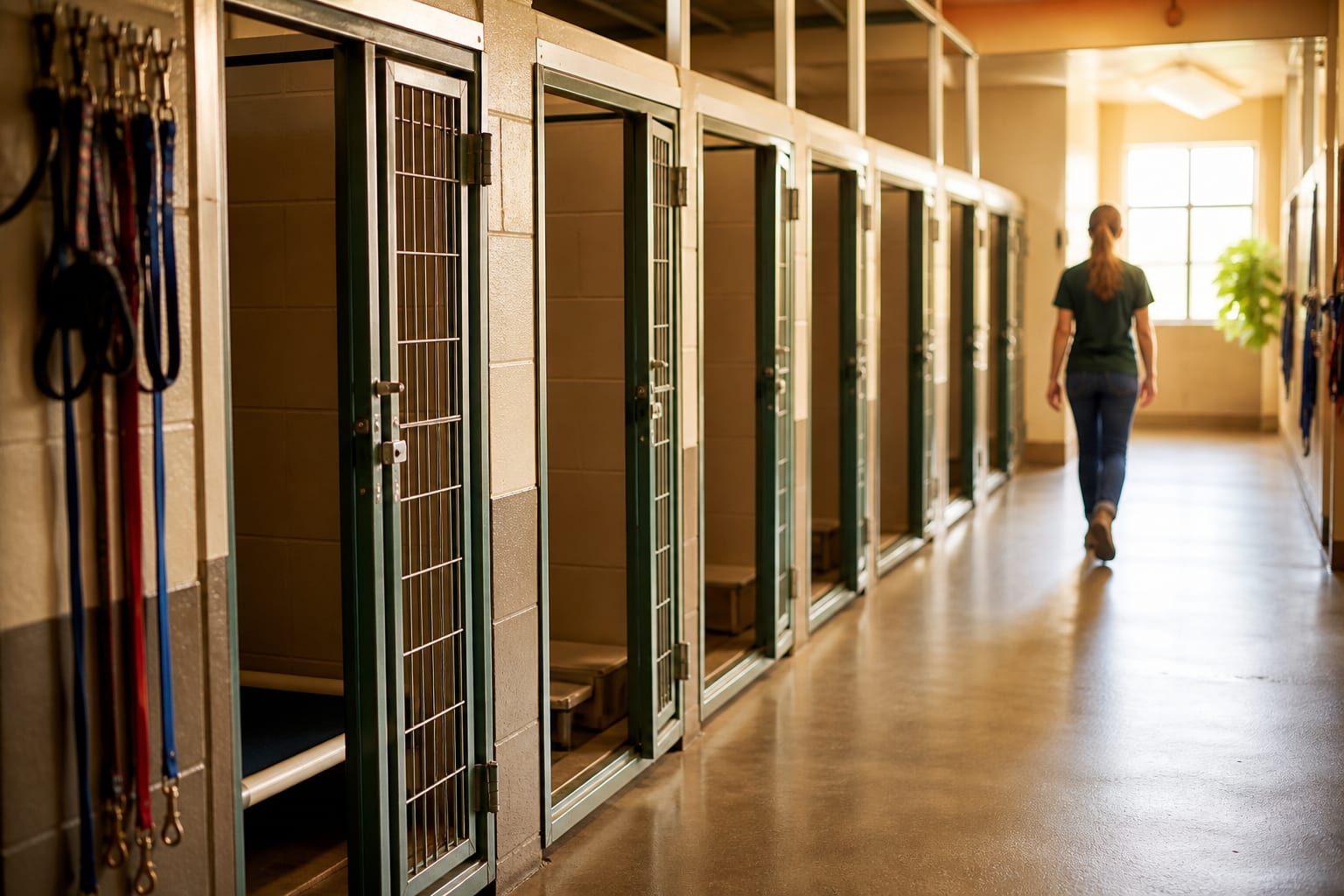
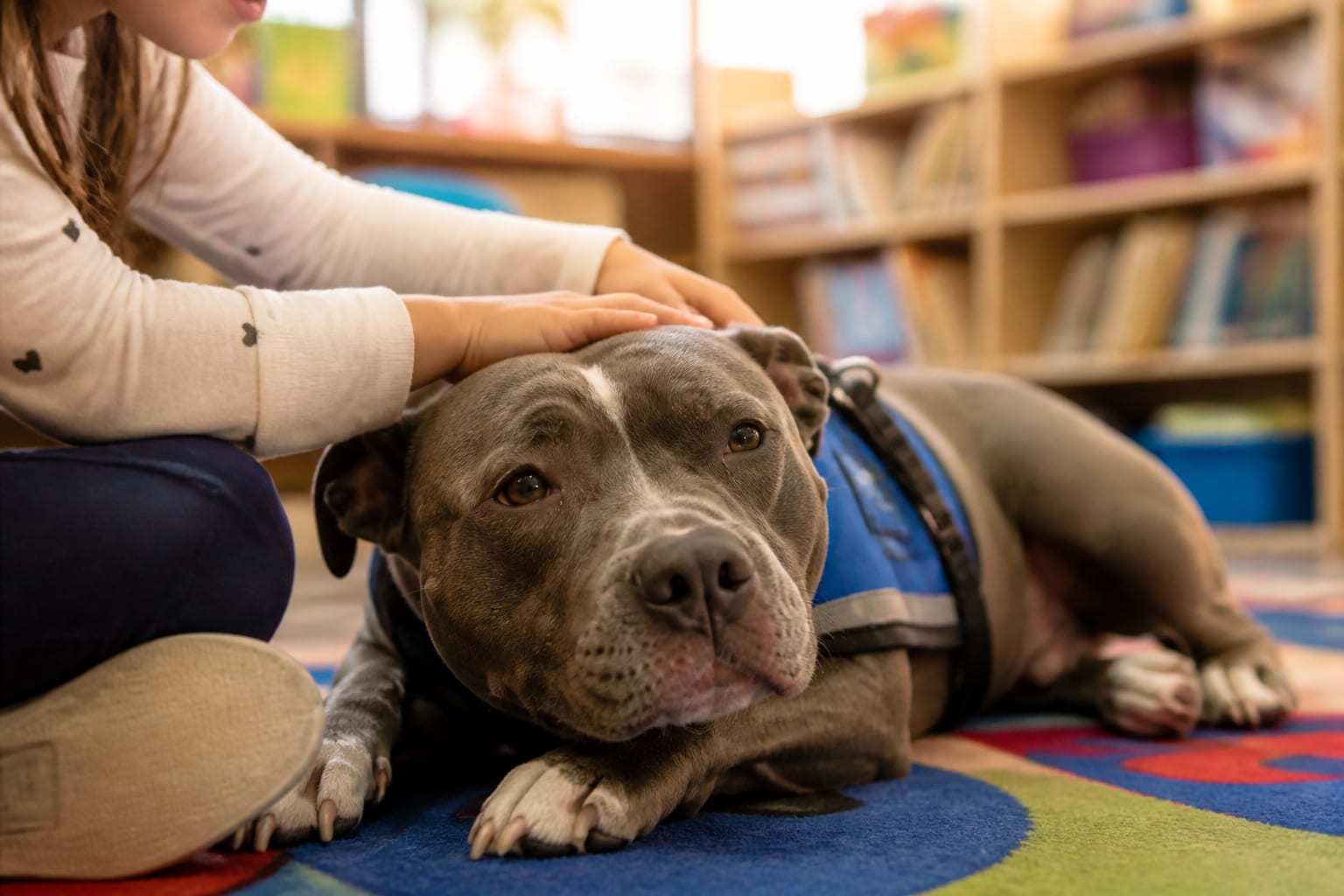
Shelter photography is a well-studied variable in adoption outcomes, and the findings are consistent enough to be uncomfortable. Images taken in a kennel run — chain link in the frame, concrete floor, harsh overhead fluorescents, a dog photographed through a barrier — measurably reduce interest. Images with the dog out of the kennel, at eye level, in decent light, with a plain background, measurably increase it. The effect is larger for blocky-headed dogs than for any other group, because those dogs are already fighting a perception problem and a bad photo confirms it.
A volunteer named Rosemary Tiedt, who photographs weddings on weekends, proposed the intervention: school pictures. She brought in a mottled blue paper backdrop of the sort that has appeared behind every third-grader in North America since 1974, two softboxes, and — the detail that made the whole thing work — a set of tiny felt graduation caps and bow ties from a craft store.
The shoot took a little under three hours, mostly because puppies do not sit. Each dog got a portrait, a name, and a one-line "class of 2026" caption written in the voice of a report card. Bruno's said: Excels at napping. Needs improvement: stairs.
The shelter posted all six on a Tuesday. By that evening they had nineteen applications. By the following Thursday every puppy had been placed, and the shelter had a waiting list of forty-one people asking about future litters.
Amankwah is careful about what he thinks this proves. "It didn't change anything about the dogs," he said. "The dogs were always adoptable. What changed is that we stopped presenting them like evidence in a case file and started presenting them like somebody's dog. That's not a marketing trick. That's just accuracy."
The shelter has since built a permanent photo corner in a storage room — a roll of seamless paper, two clamp lights with daylight bulbs, a stool, and a laminated card of instructions taped to the wall — and every animal is now photographed out of kennel before going online. Their average length of stay across all dogs has dropped by nine days since March.
Tiedt's advice to other volunteers is deliberately unglamorous. Get the dog out of the run. Get down to its eye level. Shoot in the shade or by a window, never under fluorescents. Get one photo where the mouth is open and relaxed, because a closed mouth reads as tension to human viewers. And take eighty frames, because you need eighty to get four.