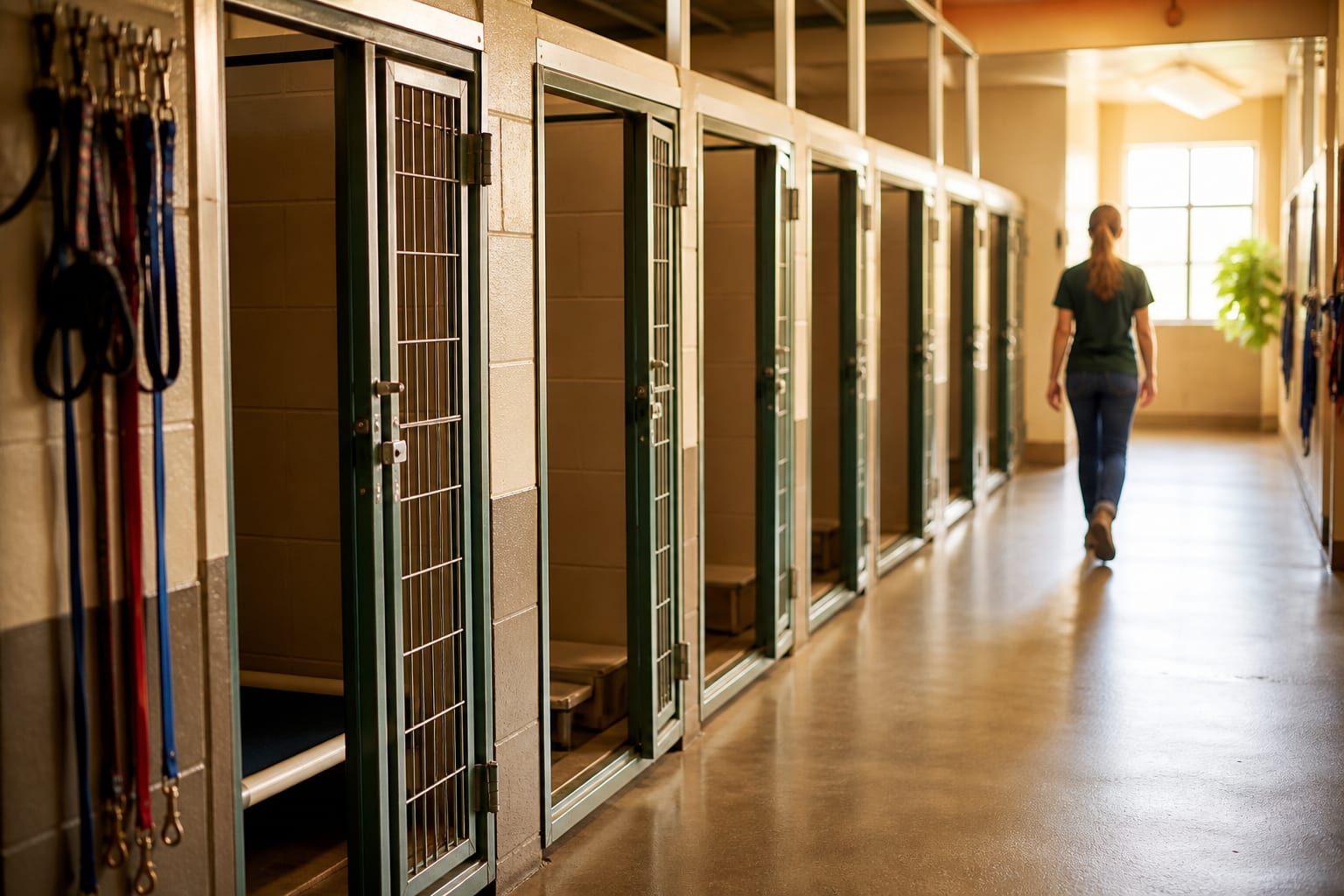
On the Friday morning of the last weekend in June, Merrow County Animal Services had forty-one dogs in a facility built for thirty-two. By Sunday evening every run was empty, including four dogs who had been there longer than three hundred days.
The shelter's director, Yolanda Prewitt, has spent the weeks since trying to work out which parts of the event were actually responsible, because the obvious answer is wrong.
"Everyone assumes it was the free adoptions," she said. "We've waived fees before. We've done it four times in six years. The best of those weekends moved eleven dogs. The fee waiver is table stakes — it gets people to consider coming. It does not get a dog into a car."
What Prewitt believes made the difference was a set of unglamorous operational changes, most of which cost nothing.
They pre-approved applications. For two weeks beforehand, the shelter processed applications in advance without tying them to a specific animal. By Friday they had a hundred and ninety approved households, which meant the weekend involved matching rather than vetting. Previously, an interested family arrived, filled out a form, and waited two to four days for reference checks — a delay during which a meaningful share simply lost momentum.
They removed the reference requirement entirely. Landlord verification, two personal references, and a home check were replaced by a conversation and a signed statement. Prewitt describes the old process as "a screening system that was extremely good at excluding renters, young people, and anybody who had ever had a pet die." Their return rate for the weekend's adoptions, at eight weeks out, is three of forty-one — comparable to their historical average under the stricter process.
They staffed for volume, not for coverage. Fourteen volunteers on the floor at all times, each assigned to a specific role: greeters at the door, four people doing nothing but walking dogs out to a shaded meet-and-greet yard, two doing paperwork, one running a supply table.
They moved every introduction outdoors. This one Prewitt now regards as the biggest single factor. Dogs in a kennel run bark, lunge, spin, and generally present as their worst selves. The same dog on grass, on a long line, twenty metres from the building, is a different animal. "A family meets a dog in a hallway with sixty other dogs screaming and they say he seems aggressive," she said. "He's not aggressive. He's in a concrete corridor."
They sent every dog out with a week of supplies. Food, a collar, a leash, a martingale for the escape artists, a bag of the treats it liked, a printed one-page profile written by whoever had walked it most, and a voucher for a free vet exam. Total cost around thirty-four dollars a dog, funded by a local business.
The four long-stay dogs went out to what Prewitt calls "the last hour" — a phenomenon shelters see repeatedly, where the animals nobody asked about all weekend get taken on Sunday afternoon by people who came for something else.
Her caution to other shelters is about the aftermath. Intake did not stop; the shelter had eleven dogs again within nine days. An empty-kennel weekend is a release valve, not a solution, and she is wary of the way these events get covered. "We didn't fix anything," she said. "We got forty-one dogs into homes, which is the whole job, and then we opened again on Tuesday. The thing I'd want other directors to take away isn't the free weekend. It's that we deleted our reference checks and nothing bad happened."