When a thin orange tabby walked into a barn in Hollisburg last month and refused to leave, the property owner did the correct thing in the correct order: she fed him for four days, confirmed he wasn't a neighbor's cat, and then drove him to a veterinary clinic to be scanned for a microchip.
The scanner found one on the first pass. What happened next took eleven days.
The chip number came back to a registry entry created in 2019 with a landline that had been disconnected, an email address at a defunct provider, and a street address in Marbury — forty-one miles away. This is the most common failure mode in the entire microchip system, and it is worth being blunt about: a microchip is not a tracking device and it is not a database. It is a fifteen-digit number. The number is only as useful as the contact record attached to it, and a startling share of records are never updated after the animal is adopted.
The clinic's technician, Grace Odum, spent parts of four shifts on it. She called the veterinary practice listed as the implanting clinic, which had merged into a larger group but still had archived records. Those records had a second phone number. That number belonged to a woman who had moved twice but who answered on the fifth ring.
Her name is Halina Duszek, and the cat's name is Sorbet, and he had walked out of a screen door in the spring of 2023.
"I searched for four months," Duszek said. "I did the flyers and the neighborhood pages and the shelters twice a week. Then at some point you stop, because you have to, and you decide he found somewhere. You don't decide he's dead. You just decide you'll never know."
Sorbet's intake exam put him at nine pounds — light for his frame — with worn teeth, a healed abscess on one ear, and no evidence of a recent injury. He tested negative for feline leukemia and FIV. The clinic's veterinarian, Dr. Oyelaran Bassey, described his condition as "a cat who has been fed by more than one person for a long time," which is the likeliest explanation for how he covered forty miles: not in one journey, but in a slow drift between porches over three years.
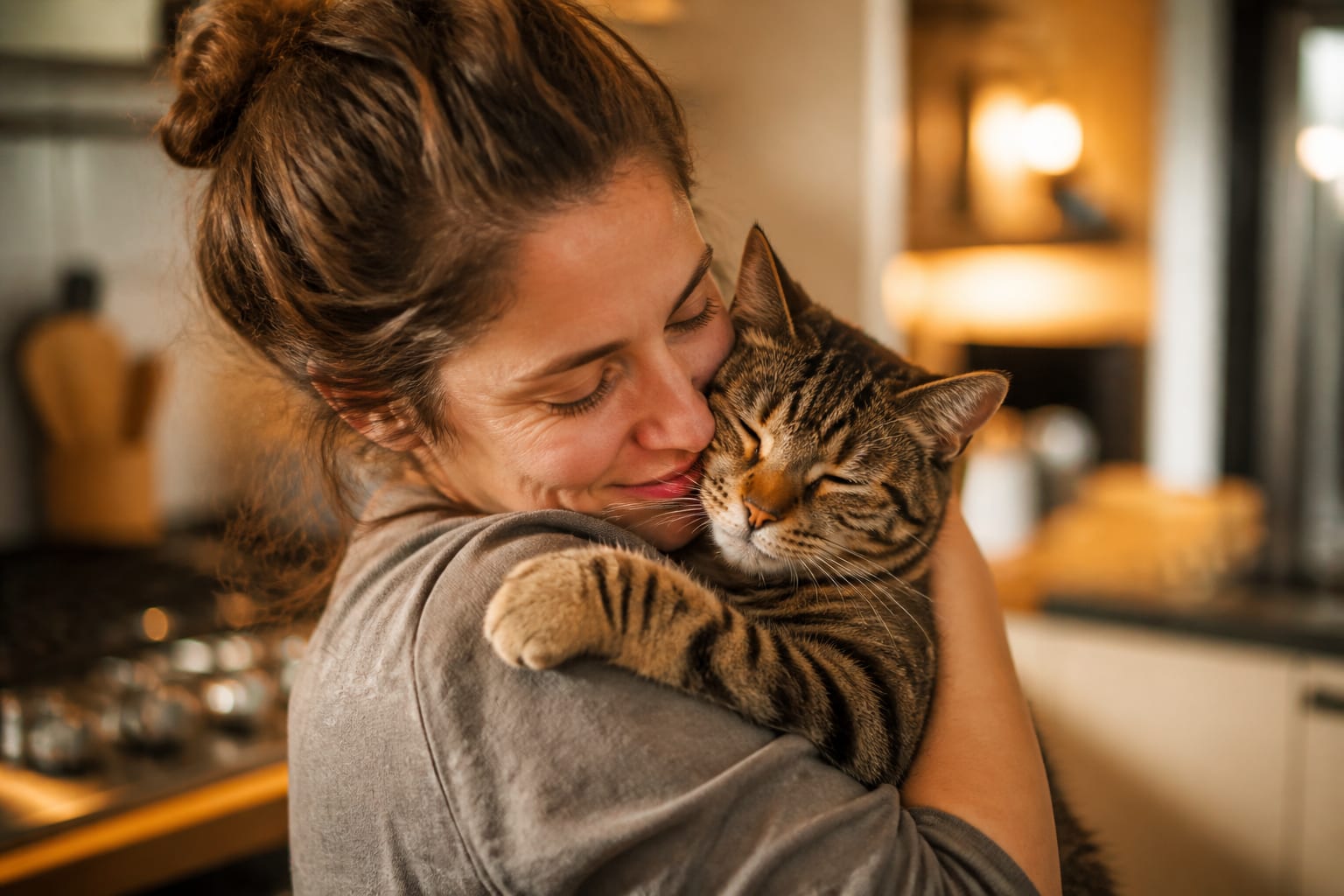
The reunion happened in an exam room. Duszek says he recognized her; Dr. Bassey says cats display recognition inconsistently and it's genuinely hard to know. Both agree he stopped struggling as soon as she picked him up.
The takeaway that every clinic in this story wants attached to it: go update your registry record today. Find the chip number on your pet's paperwork, look it up in the AAHA universal lookup tool, and confirm the phone number attached to it is a phone you currently answer. It takes four minutes. In this case it very nearly cost a family three more years of not knowing.