The ice on Sutter Pond had been thick enough to walk on for nine straight days, which is exactly the condition that makes January dangerous. A warm front had moved through overnight. By mid-morning the surface near the outflow was two inches thick instead of six, and it looked identical to the rest.
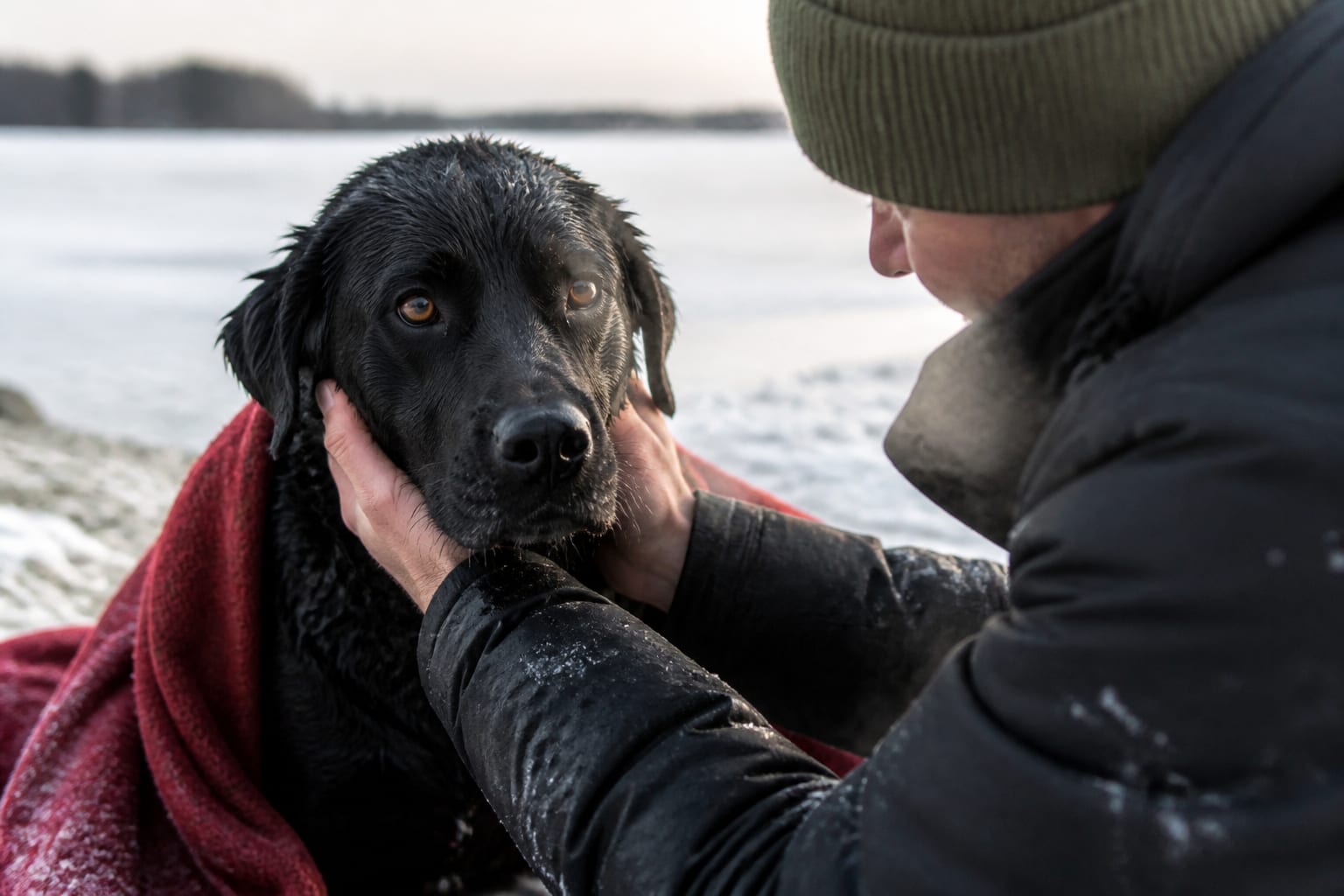
Duffy, a six-year-old golden mix, went out after a goose. He got about forty feet from shore before the ice gave. His owner, Martin Vasquez, got about fifteen feet before a woman walking behind him grabbed his coat and would not let go.
"She probably saved my life and I was furious with her at the time," Vasquez said. "I have thought about that a lot."
The math on this is grim and well documented. In cold-water incidents involving dogs, a significant share of human deaths are owners who went in after a pet — and in most of those cases the dog gets out on its own or is rescued anyway. Ice rescue technicians repeat the same instruction every winter: call 911, stay on shore, and keep the dog's attention on you from the bank so it keeps swimming toward a fixed point.
Vasquez did the second part without being told. He knelt at the water's edge and called Duffy's name continuously for eleven minutes, which gave the dog something to orient toward and — the responding lieutenant said afterward — probably kept him from swimming out toward the open middle.
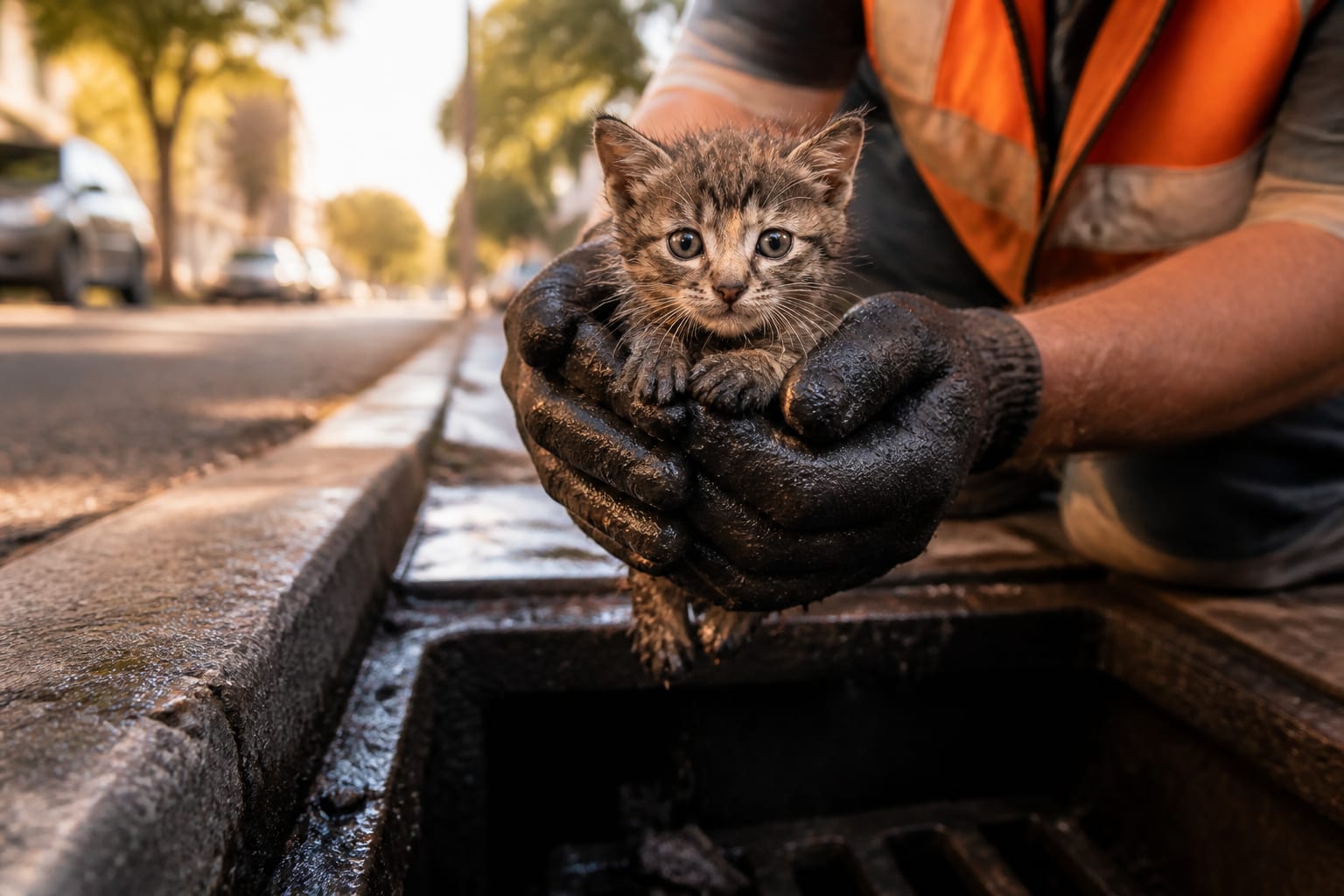
The engine company arrived at 10:41. Two technicians in bright orange dry suits went out flat on their stomachs on a rescue board, tethered to a shore team, spreading their weight over the widest possible area. The lead technician, Marisol Trent, reached Duffy at 10:52 and did not try to lift him out. She broke a channel in the ice with a hand tool and towed him back along it, which avoids the moment where a panicking sixty-pound dog claws its way onto a rescuer's chest.
Duffy's core temperature at the truck was 94.1 degrees Fahrenheit — hypothermic, but not critically. He was wrapped, warmed slowly, and driven to an emergency clinic where he stayed on fluids overnight. The main concern in these cases isn't the cold itself but what follows: aspiration pneumonia from inhaled water, and cardiac arrhythmia from warming an animal too fast. He developed neither. He went home the following afternoon and, per Vasquez, spent the entire evening asleep against a radiator.
The department used the incident in its winter advisory, which contains a single sentence that fire officials wish did not need repeating every year: the ice near an inflow, an outflow, a bridge piling, or a bend in a river is always thinner than the ice you are standing on. Dogs cannot read the surface, and a frozen pond looks to them like an open field.
Vasquez now walks Duffy on a long line from November through March. "It's not about trusting him," he said. "He's a great dog. He's just a dog. He was going to go get that goose."