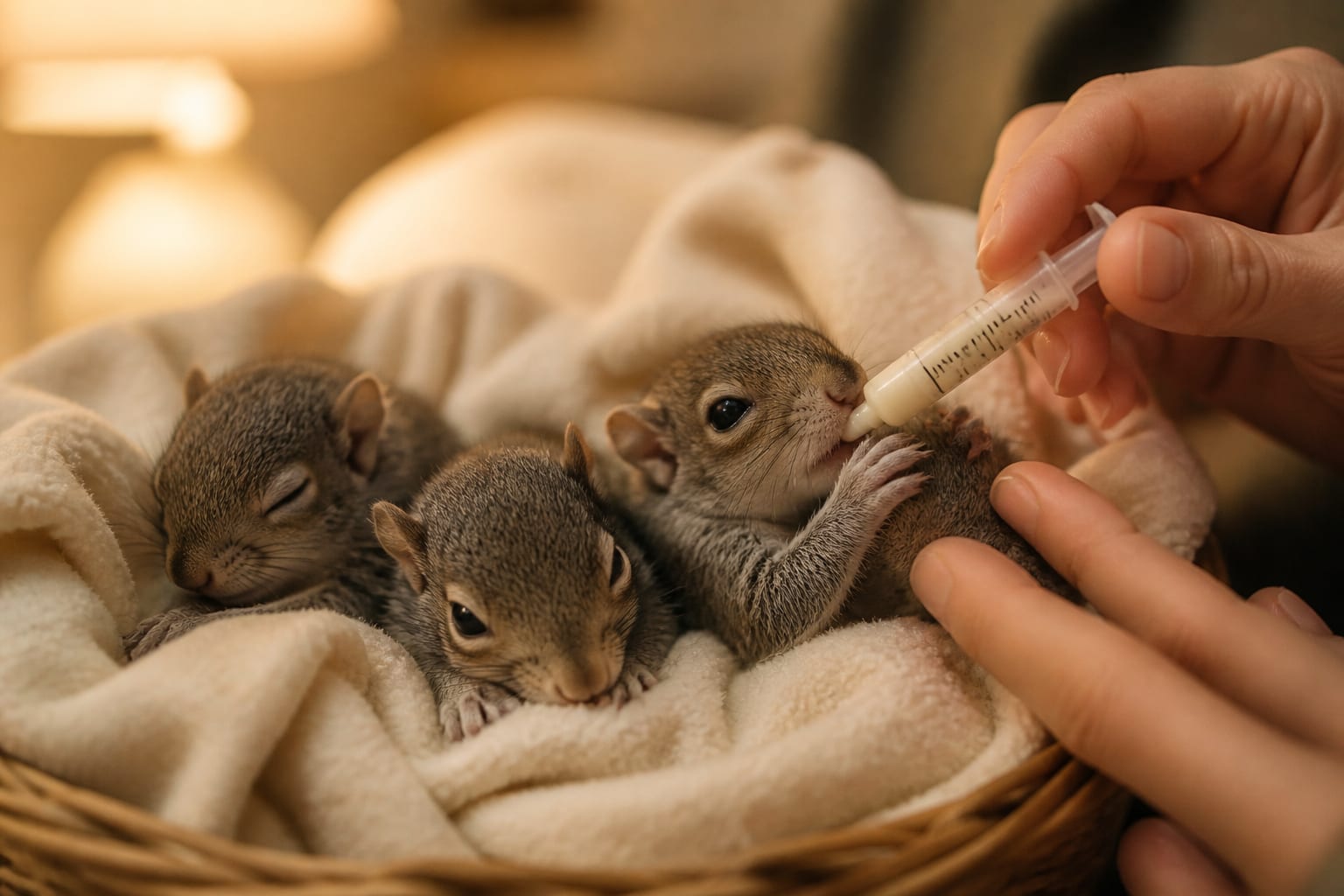
The nest came down with the limb, in the second storm of the season, into a driveway in Coldbrook. Four eastern grey squirrels, eyes still closed, roughly three weeks old, were in it. The homeowner did the first two things correctly and the third thing wrong, which is a very normal ratio.
She put them in a shoebox with a towel. She kept the box warm and dark and away from her dog. And then she gave them cow's milk from an eyedropper, because that is what everybody's instinct says to do, and it is one of the most common causes of preventable death in orphaned mammals.
"Cow's milk is the thing we ask about first, every time," said Ambrose Duvall, a licensed rehabilitator who took the litter. "Squirrels are lactose intolerant. It causes severe diarrhoea, and a three-week-old squirrel with diarrhoea is dead in a day and a half. We got these four in time. We often don't."
Before the storm-limb protocol goes any further, rehabilitators want one thing on the record: the first attempt should always be reuniting them with the mother. If the nest tree is identifiable and the babies are uninjured and warm, the standard method is to place them in an open box secured at the base of the tree, with a heat source if the weather is cool, and leave the area for several hours. Mother squirrels retrieve fallen young reliably and will carry them to a back-up nest. Reuniting works far more often than people expect, and no rehabilitator can beat it.
In this case the nest tree had been reduced to firewood and the litter was already showing dehydration, so reunion was off the table.
What followed was twelve weeks of unglamorous work. Feeding was every three hours around the clock for the first fortnight, using a species-appropriate formula warmed to body temperature and delivered by a 1cc syringe with a specialised nipple, at a specific angle — feed a squirrel on its back and it aspirates. Each animal had to be weighed daily to the gram and stimulated to urinate after each feed. Duvall lost eleven pounds over the intake period and describes the first three weeks as "essentially having quadruplets."
The second phase is the one that determines whether a hand-raised squirrel can survive release, and it is mostly about deliberately withdrawing. At around seven weeks, once eyes were open and solid food was introduced, the litter moved to a large indoor enclosure with branches, then to an outdoor pre-release cage at ten weeks. Handling stopped almost entirely. Food was hidden rather than presented. Natural browse — hickory nuts in the shell, pine cones, bark — replaced formula. Human contact was reduced to a silent daily check.
"People think the milestone is when they open their eyes," Duvall said. "The milestone is the day they stop coming to me. If a squirrel runs to a human at twelve weeks I have failed, and it will die in the first week outside."
The four were soft-released in late June: the pre-release cage was opened in a wooded property with a supported feeding station left in place for three weeks, so they could come and go while they learned the territory. Three were still visiting the station at the end of the third week. One left on the first day and was not seen again, which Duvall counts as the best outcome of the four.
His closing advice for a fallen nest: warm box, no food, no water, no milk of any kind, and a phone call to a licensed rehabilitator. "Everything you want to do with your hands is the thing that hurts them," he said. "The box and the phone call is the whole job."